British Empire Exhibition Stamps
Britain’s first commemorative stamps, issued for the Wembley Exhibition, marked a major turning point in British philately.
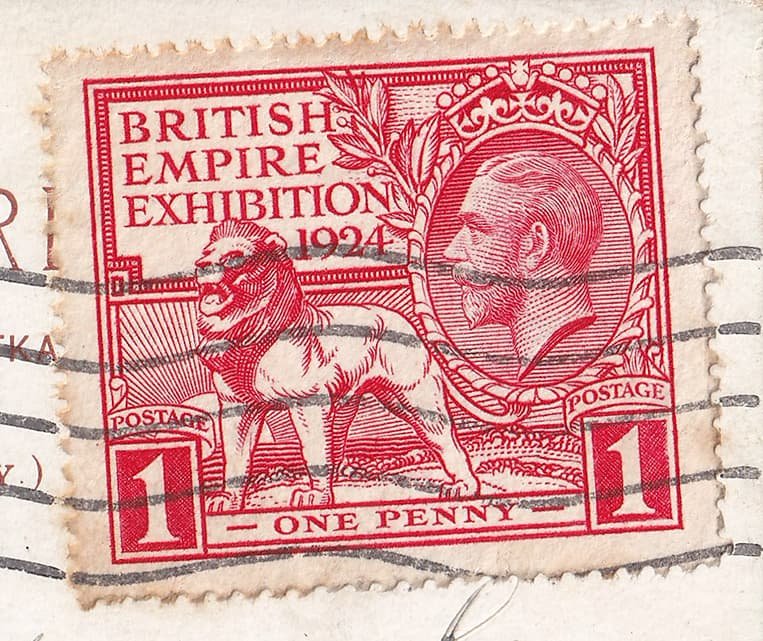
In 1924, Britain did something it had never done before: it issued commemorative postage stamps for a national event. The occasion was the vast British Empire Exhibition, staged at Wembley in northwest London, a grand showcase of imperial trade, culture, and industry. The result was a pair of stamps marking a quiet but important turning point in British philately.
A First for British Stamps
Until then, British stamps had been conservative, featuring little more than the monarch’s profile and standardised designs. The 1924 Wembley issues broke that mould. For the first time, stamps were created not just for postal necessity but to commemorate an event.
Two values were issued:
- 1d (red) – intended for standard inland postage
- 1½d (brown) – for slightly heavier or overseas mail
Both stamps feature King George V’s profile, but the surrounding design is more expressive.
Design & Symbolism
The stamps were designed by Harold Nelson and engraved by J.A.C. Harrison. Their composition is rich with imperial symbolism:
- A noble lion stands at the centre—representing Britain.
- Pillars flank the design, suggesting strength and stability.
- The inscription “BRITISH EMPIRE EXHIBITION 1924” boldly declares the occasion.
- The King’s profile anchors the design in tradition
It’s a fascinating mix of monarchy and empire, heritage and modern messaging captured in miniature.
The 1925 Reissue
The Exhibition proved so popular it reopened in 1925, causing a reissue of the stamps. Rather than redesigning them, the Post Office made a subtle but important change:
- The date was altered from 1924 to 1925
Otherwise, the design remained identical. This creates an appealing pair for collectors, nearly indistinguishable at a glance but clearly distinct on closer inspection.
Production & Use
Printed by Waterlow and Sons Ltd, the stamps were produced in large quantities and used in the genuine postal service. Unlike some later commemoratives, these were not souvenirs but working stamps found on everyday correspondence across Britain and the Empire.
Today, they are relatively affordable used, though well-centred mint examples, especially with original gum, are more desirable.
Collecting & Legacy
For collectors, the Wembley stamps offer several points of interest:
- Historical importance – Britain’s first commemorative issue
- Design study – a departure from strict Victorian/Edwardian conventions
- Varieties – shades, perforations, and condition differences
- Context – tied to a major imperial exhibition
They also fit neatly inside broader thematic collections: Empire, exhibitions, or early 20th-century design.
A Small Stamp, A Big Statement
The British Empire Exhibition stamps may be modest in size, but they mark a change in how Britain used its postage system, not just for communication but for telling stories. In these two small designs, the Empire presents itself to the world as confident, structured, and enduring.
Further Reading