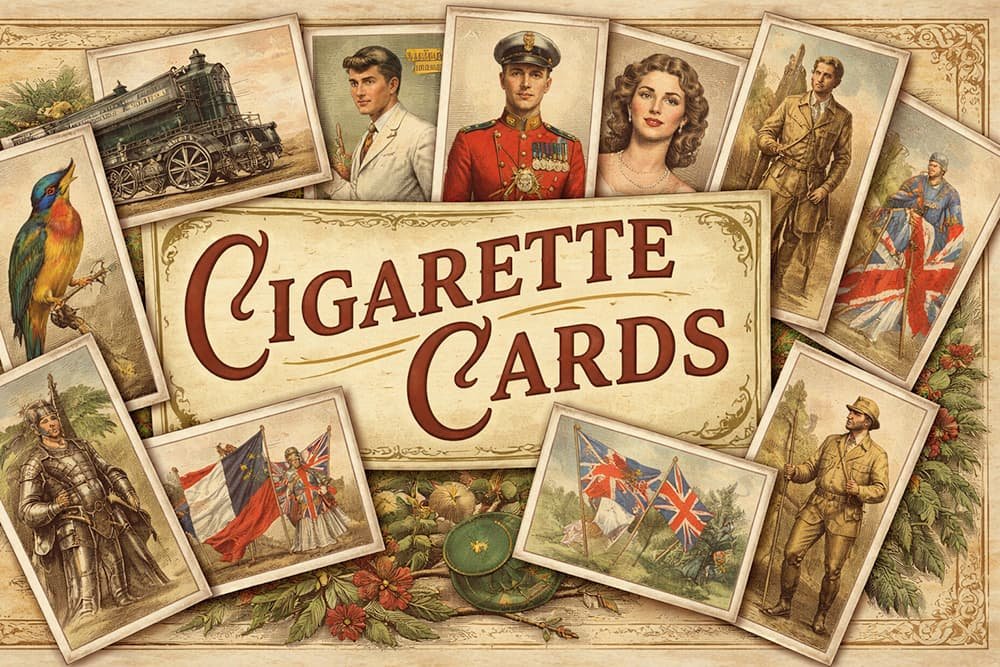
Cigarette cards are among the most recognisable and collectable forms of printed ephemera, combining everyday commerce with richly illustrated storytelling. First introduced in the late 19th century as a practical means of stiffening cigarette packets, they quickly evolved into miniature works of art, designed to inform, entertain, and, above all, encourage repeat purchases.
By the early 20th century, cigarette cards had become a social phenomenon, with millions in circulation across Britain, Europe, and beyond.
The so-called “golden age” of cigarette cards—roughly from the 1890s to the outbreak of the First World War—saw an extraordinary variety of subjects captured in vivid colour and fine detail. From military uniforms and world flags to sporting heroes, wildlife, and film stars, these small cards offered an insight into the interests and hopes of their time. Across many households, collecting and organising complete sets turned into a shared pastime, often aided by specially produced albums.
Leading tobacco companies such as W.D. & H.O. Wills, John Player & Sons, and Gallaher Ltd competed to produce ever more attractive and educational series. Their cards were not only marketing tools, but also informal encyclopaedias—introducing collectors to history, geography, science, and popular culture in an accessible, visual format. The quality of printing, particularly in chromolithography, ensured that many survive today in remarkable condition.
Cigarette Cards Today
Today, cigarette cards are valued not only for their nostalgic appeal but also for their historical importance. They give insight into the social values, design trends, and commercial practices of their era. On Printed Past, this page acts as a portal to exploring individual series, notable publishers, and the stories behind the images—preserving a fascinating chapter in the history of everyday print culture.
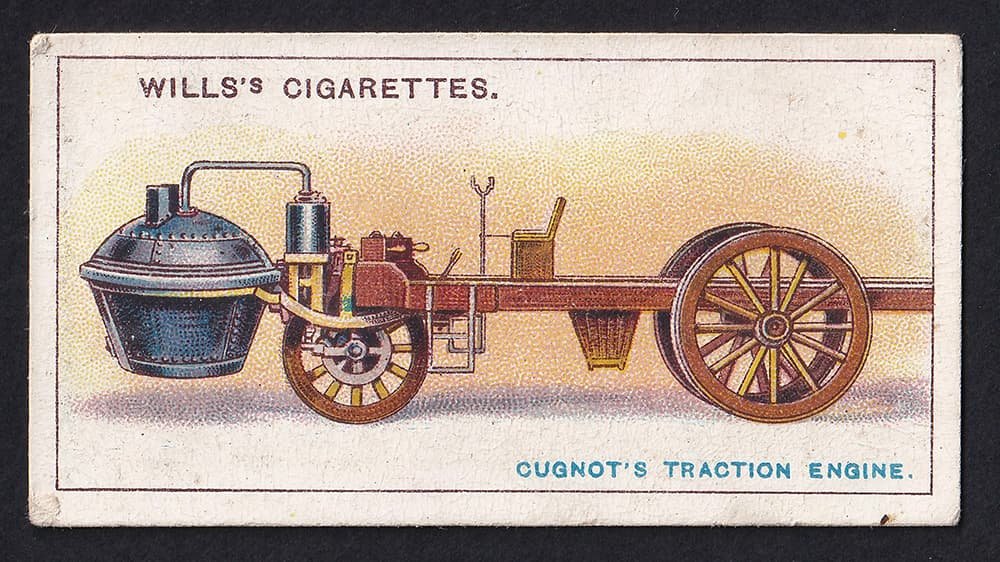
Cugnot’s Traction Engine
The Card This cigarette card depicts Cugnot’s traction engine, a machine with a special place in…