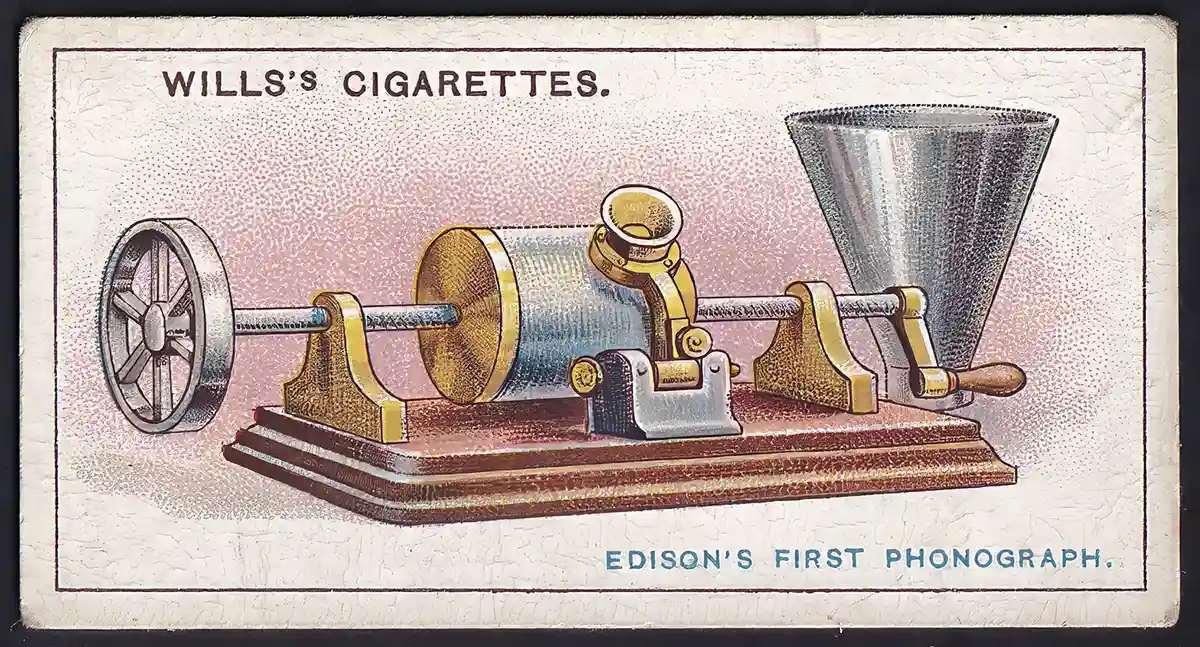
Edison’s First Phonograph
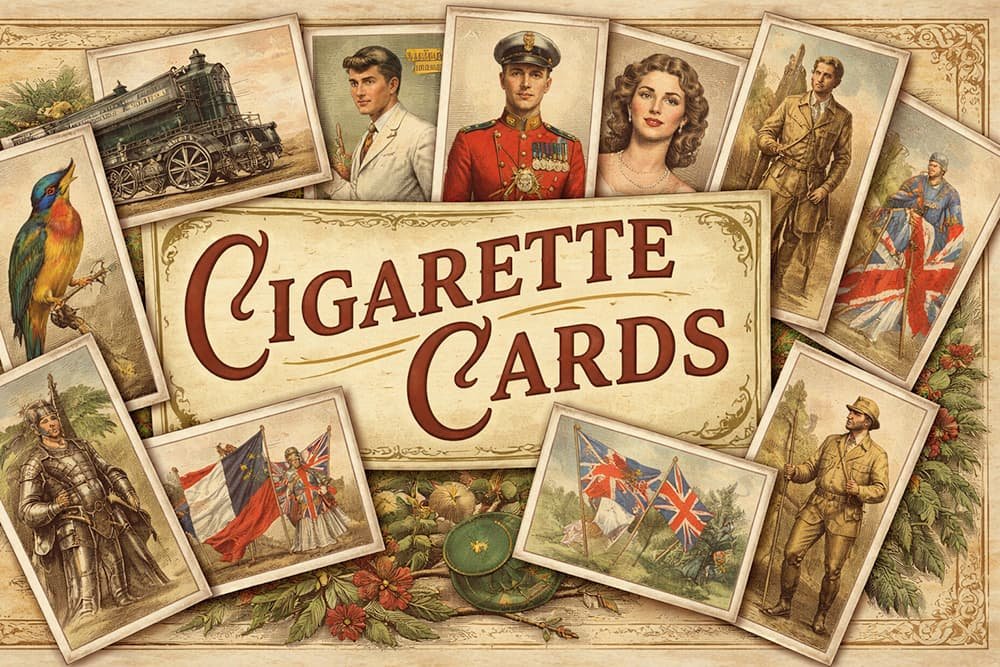
A voice captured on a sheet of tinfoil: this cigarette card celebrates an invention that turned an astonishing idea into reality.
Issued in 1915, W.D. & H.O. Wills’ Famous Inventions series included this tribute to Thomas Alva Edison’s pioneering phonograph. Card No. 9 takes us back to 1877, when Edison and his team at Menlo Park, New Jersey, developed a machine that could record sound and play it back.
Card Reverse
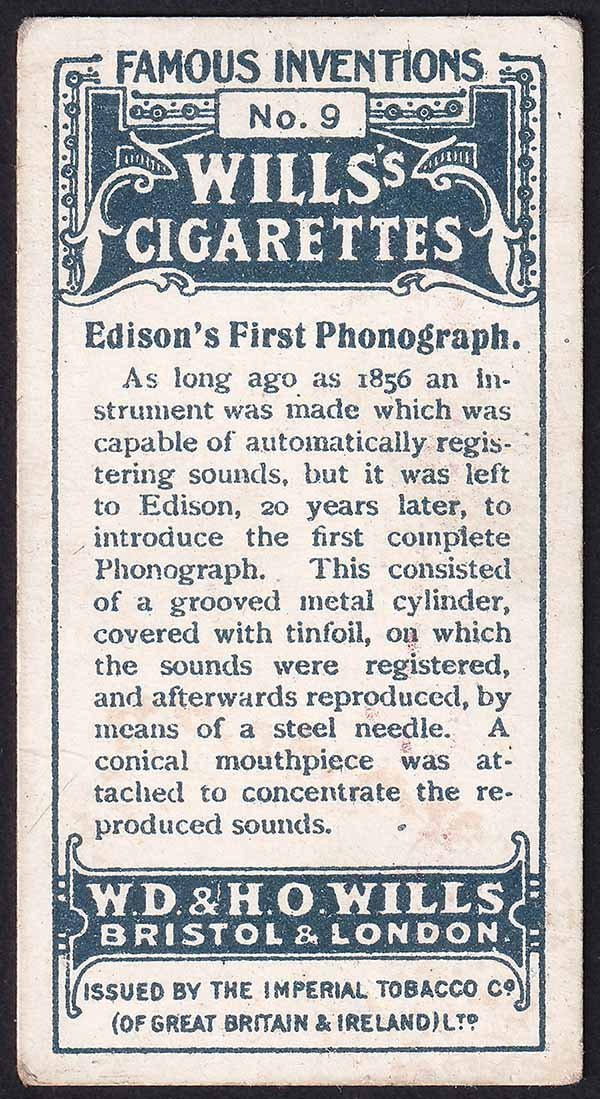
Edison’s First Phonograph.

As long ago as 1856 an instrument was made which was capable of automatically registering sounds, but it was left to Edison, 20 years later, to introduce the first complete Phonograph. This consisted of a grooved metal cylinder, covered with tinfoil, on which the sounds were registered, and afterwards reproduced, by means of a steel needle. A conical mouthpiece was attached to concentrate the reproduced sounds.
A Hands-on Machine
The machine worked in a very hands-on way. You turned a handle to spin a tinfoil-covered cylinder. When someone spoke into the mouthpiece, a thin piece called a diaphragm vibrated, moving a needle that made marks on the foil. Running the needle back over these marks would play back the recorded sound. The recordings were delicate and could only be played a few times, but the invention proved that speech could be saved and heard again.
Edison once said that he tested his invention by recording the nursery rhyme “Mary had a little lamb.” His mechanic, John Kruesi, built the machine’s main part, while his assistant, Charles Batchelor, helped ensure it worked properly. Edison relied on a skilled team.
Before Edison, some people had figured out how to make marks that showed sound, but Edison’s big idea was to invent a machine that could also play those sounds back. This made it possible to save voices, music, and spoken notes for the first time.
By 1915, people collecting these cards could already see how the invention was changing the way they enjoyed music and entertainment. Today, the card is interesting because it shows how two ways of remembering the past, printed stories and recorded sound, came together.
Item Details